Coping with Miscarriage: Navigating Grief That Others Don’t Always Understand

Miscarriage grief is real, even when the loss feels invisible to others. You don't have to minimize your pain or rush your healing.
Miscarriage is a deeply personal loss—one that is often invisible to others but profoundly felt.
You may be grieving something that others didn’t fully see, hold, or fully understand. And while your world may feel like it has shifted entirely, the outside world often continues on as if nothing happened. That disconnect can make an already painful experience feel even more isolating.
Research suggests that miscarriage occurs in approximately 10–20% of known pregnancies, yet the emotional impact is often under-discussed and widely misunderstood. Many people expect grief to follow visible loss—but miscarriage grief is often quiet, internal, and unrecognized.
You might find yourself wondering:
Why does this feel so heavy?
Why can’t I move on?
Why does it seem like no one else understands how much this matters?
The truth is: your grief is real, valid, and worthy of support. You are not overreacting. You are responding to a meaningful loss.
What is Miscarriage Grief?
Miscarriage grief is the emotional response to losing a pregnancy—one that can include sadness, anger, guilt, confusion, longing, and even numbness.
Unlike other types of loss, miscarriage grief is often complicated by the fact that the life you were beginning to imagine may not have been fully visible to others. You may have already envisioned a future, built hopes, or started to form an emotional connection to your baby.
This kind of grief can exist on multiple levels at once:
The loss of a pregnancy
The loss of future plans and expectations
The loss of a version of yourself that was becoming a parent (or growing your family)
The loss of certainty, safety, or trust in your body
Because of this, miscarriage grief is not “just sadness”—it is layered, complex, and deeply personal.
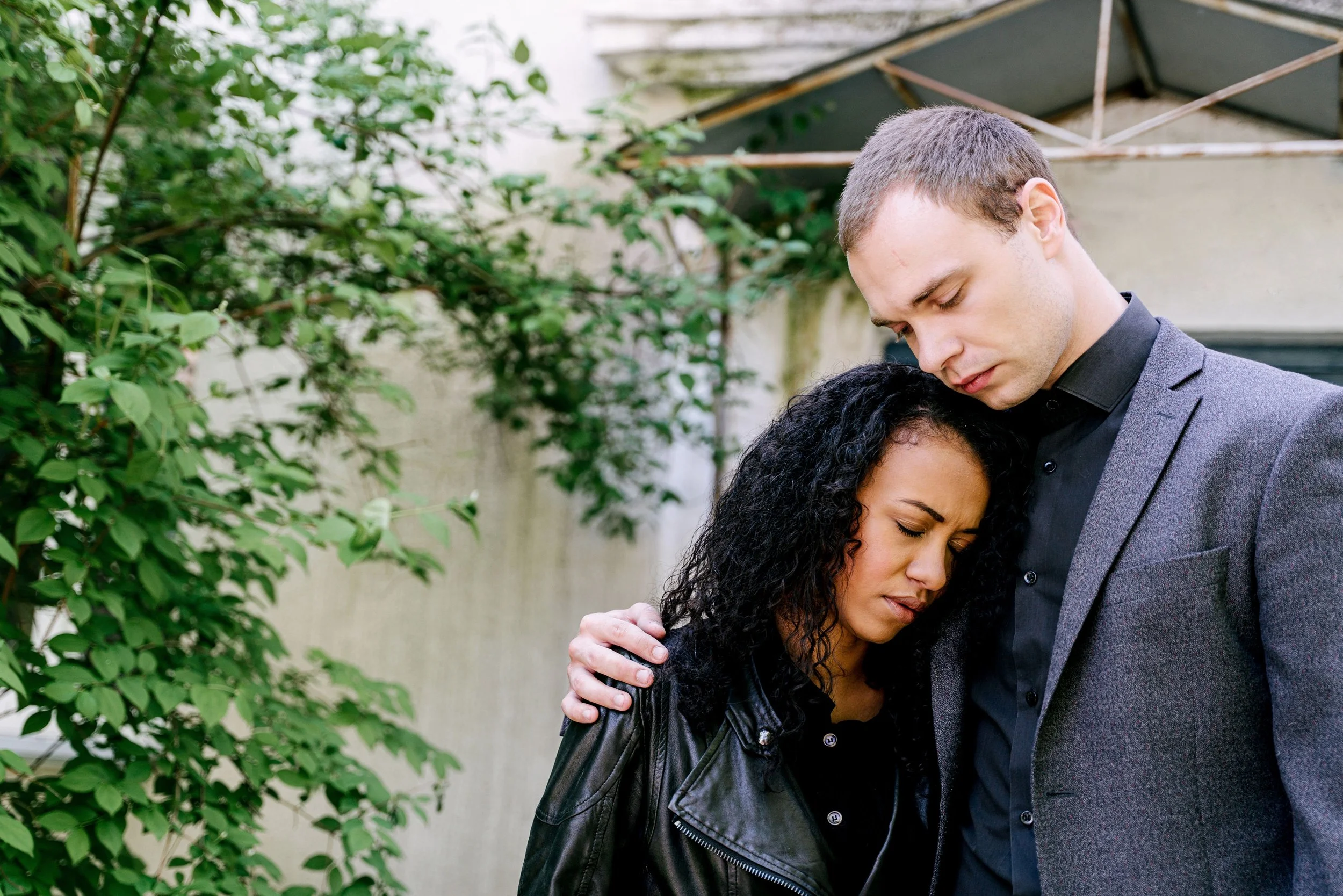
Miscarriage can bring grief into a relationship in different ways. You don't have to grieve the same way to grieve together.
What This Kind of Grief Actually Feels Like
This is the part many people don’t talk about openly.
Miscarriage grief doesn’t always look the way people expect. It can come in waves, shift day-to-day, and show up in ways that are hard to explain.
You may experience:
Deep sadness that feels heavy or overwhelming
Feeling emotionally disconnected from others
A sense that something important is missing
Wanting acknowledgment of your loss—but not knowing how to ask for it
Carrying grief quietly while appearing “okay” on the outside
Anhedonia or feeling numb
There may be moments when you feel relatively steady—and then something small brings the grief rushing back.
You might notice thoughts like:
“It feels like everyone else has moved on.”
“Was I even far enough along to feel this sad?”
“Why does this still affect me so much?”
“No one else understands me.”
You may also feel a deep internal conflict—wanting to talk about your loss while also feeling unsure if it’s “appropriate” or if others will understand. It can also be hard when your partner isn’t able to go through the exact same experience as you because you were carrying the baby. It can sometimes be hard for partners to really understand what their significant other is going through. Your body is the one that has the impact of hormones from pregnancy, feel bonded with the baby, and also that goes through the miscarriage process.
This emotional push-and-pull can make grief feel even more isolating.
Why Miscarriage Grief Feels So Complicated
Miscarriage grief is often more complex than people expect—and there are real reasons why.
Disenfranchised Grief
Miscarriage is often considered a form of disenfranchised grief, meaning it’s not always fully recognized or validated by society.
Because of this, you may receive messages—spoken or unspoken—that minimize your experience:
“At least it happened early”
“You can try again”
“Everything happens for a reason”
Even when well-intended, these responses can make you feel like your grief isn’t fully allowed or understood.
Lack of Acknowledgment or Ritual
With many types of loss, there are rituals—funerals, memorials, shared grieving spaces.
With miscarriage, there often isn’t a clear way to mark the loss. You may not have had the chance to publicly share your pregnancy, which can leave you grieving without acknowledgment or closure.
This lack of recognition can intensify feelings of invisibility and isolation.
Physical and Emotional Healing at the Same Time
Miscarriage is not only emotional—it is also physical.
Your body may be recovering from hormonal changes, bleeding, fatigue, or medical procedures—all while you are trying to process the emotional impact of the loss.
This overlap can make everything feel heavier, more exhausting, and harder to navigate.
Loss of Control and Safety
Miscarriage can also shift your sense of trust—in your body, in pregnancy, or in the future.
You may find yourself thinking:
“Can I trust my body again?”
“What if this happens next time?”
“Can my relationship withstand another miscarriage or pregnancy?”
This loss of certainty can add another layer of anxiety or fear to your grief.
Common Emotional Experiences After Miscarriage

Sometimes grief can make you feel alone, even when you're right beside the person you love. Healing together doesn't mean grieving in exactly the same way.
Grief after miscarriage doesn’t follow a straight line, but there are some common emotional patterns many people experience:
Feeling alone in your grief, even when surrounded by others
Feeling frustrated and angry with your partner for “not getting it”
Comparing your loss to others and minimizing your own pain
Guilt or self-blame (even when it’s not your fault)
Feeling like something is wrong with your body
Difficulty “moving forward” or returning to normal routines
Emotional numbness or disconnection
Increased sensitivity to pregnancy or baby-related content
You might logically understand that miscarriage is common and often not preventable—but emotionally, it can still feel deeply personal.
What Can Make Miscarriage Grief Feel Even Harder
There are certain experiences that can unintentionally intensify grief:
Minimizing Comments
Statements like:
“You can try again”
“At least you know you can get pregnant”
“Everything happens for a reason”
…can feel dismissive, even if they’re meant to be comforting.
Lack of Acknowledgment
When others don’t recognize your loss, it can create a sense that your grief is invisible—or that you’re expected to move on quickly.
Pressure to “Move On”
There is often an unspoken expectation to return to normal life sooner than you may feel ready for.
Grief doesn’t work on a timeline—and feeling rushed can make the healing process feel more complicated.
Internal Pressure
Sometimes the pressure comes from within:
“I should be over this by now.”
“Maybe I’m making this a bigger deal than it is.”
These thoughts can create additional emotional strain on top of the grief itself.
How to Cope with Miscarriage

Grief has no timeline. You are allowed to honor your loss, remember your baby, and heal in your own time.
There is no “right” way to grieve—but there are ways to support yourself through it.
Allow Your Grief (Without Minimizing It)
Your grief does not need to be justified or compared to anyone else’s.
Giving yourself permission to feel what you feel—without rushing or minimizing it—is an important part of healing.
Grief may come in waves, and that’s okay.
Create Meaningful Rituals
Because miscarriage often lacks formal acknowledgment, creating your own rituals can be powerful.
This might look like:
Writing a letter to your baby
Lighting a candle on meaningful dates
Keeping a small keepsake
An altar of remembrance (like with Dio de los Muertos)
Planting something in remembrance
These acts can help create space for your grief and honor your experience.
Set Boundaries with Others
You are allowed to protect your emotional space.
This might mean:
Limiting conversations that feel overwhelming
Letting others know what is or isn’t helpful to hear
Taking space from environments that feel triggering
Taking time to reengage with friends and family who are pregnant or have children
Boundaries are not about pushing people away—they’re about supporting yourself.
Seek Support from People Who Understand
Talking to someone who truly understands miscarriage grief can make a significant difference.
This could be:
A perinatal therapist
A support group
A trusted friend who can hold space without trying to “fix” things
You don’t have to carry this alone.
Postpartum Support International has multiple free support groups online that are excellent resources for individual going through the perinatal period and have had a loss.
When Miscarriage Grief May Need Additional Support

You don't have to carry miscarriage grief alone. Therapy can offer a safe space to be seen, supported, and gently process your loss.
Grief after miscarriage is normal—but sometimes additional support can help.
You might consider reaching out if:
Your grief feels overwhelming or constant
You feel stuck or unable to move forward at all
Guilt or self-blame feels persistent
You’re experiencing anxiety about the future
You feel disconnected from yourself or others
Constantly fighting with partner and feeling isolated
Seeking support doesn’t mean something is wrong—it means you’re responding to what you need.
How Therapy Can Help with Miscarriage Grief
Therapy can offer a space where your grief is fully seen, without needing to explain or minimize it.
In sessions, you might:
Process the emotional impact of your loss
Explore feelings of guilt, anger, or confusion
Understand how grief is showing up in your body and mind
Navigate fear or uncertainty about the future
Create meaning around your experience
My approach is warm, supportive, and grounded in meeting you where you are—not where you feel like you “should” be.
This isn’t about rushing healing. It’s about supporting you in feeling more like yourself again, at your own pace.
FAQ
Is it normal to still feel sad months after a miscarriage?
Yes. Grief does not follow a set timeline. It’s completely normal for feelings to come and go over time, even months later.
Why do I feel guilty after a miscarriage?
Guilt is a very common response, even when it’s not based in reality. Many people search for a reason or something they could have controlled—but miscarriage is often outside of your control.
Is miscarriage grief the same as other types of grief?
It shares similarities, but miscarriage grief can feel more isolating due to lack of acknowledgment and societal understanding.
How do I explain my grief to others?
You don’t have to explain your grief in a way that makes others comfortable. You can share as much or as little as feels right for you.
Will I always feel this way?
Grief can soften over time, especially with support. It may not disappear completely—but it can become more manageable and less overwhelming.
If you’re navigating pregnancy loss, you don’t have to go through it alone. It can already be so incredibly isolating so we have to make sure that you can put your oxygen mask on first.
Therapy can offer a space where your grief is acknowledged, supported, and gently processed—without pressure to move on before you’re ready.
I offer therapy for women experiencing miscarriage, pregnancy loss, and other perinatal challenges across California, Florida, Texas, Virginia, and Idaho.
Resources
https://www.marchofdimes.org/find-support/topics/miscarriage-loss-grief
https://www.acog.org/womens-health/faqs/early-pregnancy-loss
https://www.miscarriageassociation.org.uk/information/grief-and-loss/
Until next time,
Take what serves you and leave the rest.
Healing doesn't happen all at once—it happens in small moments of understanding, self-compassion, and choosing to keep moving forward.
If you're navigating pregnancy, postpartum, infertility, miscarriage, birth trauma, relationship challenges, or another major life transition, you don't have to figure it out alone.
I'd be honored to walk alongside you.
— Megan Monger, LMFT, PMH-C
Founder, Sail Away Therapy
Ready for support?
Whether you're preparing for parenthood, adjusting after birth, processing infertility or loss, or navigating another life transition, therapy can help you feel more grounded and supported.
Continue Reading
You might also enjoy:
Disclaimer: This blog is intended for educational purposes only and does not constitute medical or mental health treatment. Reading this article does not establish a therapist-client relationship. If you're experiencing a mental health emergency, please contact your local emergency services or crisis hotline immediately.