How to Cope with Postpartum Anxiety (Without Feeling Like You’re Failing)
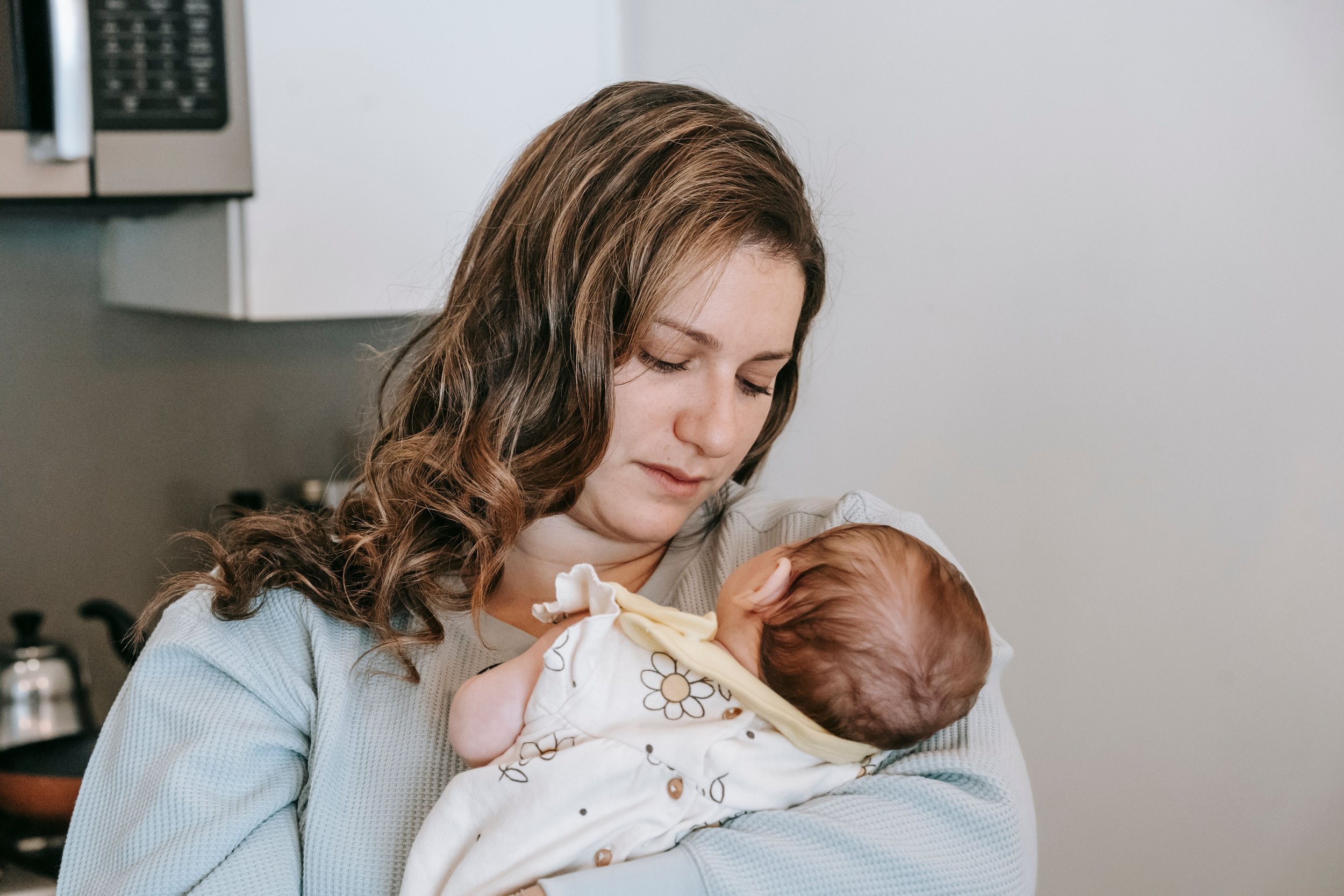
You don't have to carry postpartum anxiety alone. If your mind feels stuck in "what if" thoughts or it's hard to relax, know that support is available—and healing is possible.
If you find yourself constantly checking on your baby, replaying “what if” scenarios, or feeling like you can’t fully relax—even when everything is okay—you’re not alone.
Postpartum anxiety is incredibly common, yet it’s rarely talked about as openly as it should be. “Postpartum anxiety affects approximately 1 in 4 women, with significant implications for both mothers and newborns”. (Ogallar et al., 2025) Many women expect to feel joy, connection, and fulfillment after bringing home their baby. So when anxiety shows up instead, it can feel confusing, overwhelming, and even shameful.
The truth is: this doesn’t mean you’re doing anything wrong. It means your mind and body are trying to adjust to one of the biggest transitions of your life—and they may need support.
What is Postpartum Anxiety (PPA)?
Postpartum anxiety is a mental health condition that affects many women after giving birth. It often involves excessive worry, racing thoughts, restlessness, and physical symptoms like tension or difficulty sleeping. Up to a 50% increase in anxiety is considered in the normal range, but outside of this postpartum anxiety would be considered.
“Postpartum anxiety negatively impacts maternal functioning, bonding, and infant outcomes.” (Goodman, Watson, Stubbs, 2016) Unlike general stress, postpartum anxiety can feel constant and intrusive—often centered around your baby’s safety, your ability to care for them, or fears of something going wrong.
Signs of Postpartum Anxiety

Some of the hardest moments after birth are the ones no one else can see. If you're feeling overwhelmed, anxious, or emotionally exhausted, you don't have to navigate it alone.
Postpartum anxiety doesn’t look the same for everyone, but some common signs include:
Constant or uncontrollable worry
Intrusive or “what if” thoughts
Difficulty sleeping, even when your baby is asleep
Feeling on edge or unable to relax
Physical symptoms like a racing heart, nausea, or tight chest
Repeatedly checking on your baby
Avoiding situations that feel unsafe
You might logically know everything is okay—but your body doesn’t feel convinced.
What Postpartum Anxiety Actually Feels Like
This is the part many people don’t talk about.
Postpartum anxiety often feels like your brain is stuck in overdrive. You may feel like:
You can’t “turn off” your thoughts
You’re constantly scanning for something that could go wrong
Relaxing feels unsafe or unfamiliar
You may not want anyone to hold or touch the baby
You may find it difficult to leave the baby with others that you trust
You need to stay alert at all times
You’re carrying an invisible weight of responsibility
Even during quiet moments, your mind may jump to worst-case scenarios.
You might think:
“What if something happens while I’m sleeping?”
“What if I miss something important?”
“Why can’t I just relax like other moms seem to?”
These experiences can feel isolating—but they are far more common than people realize.
Why Postpartum Anxiety Happens (It’s Not Just Hormones)
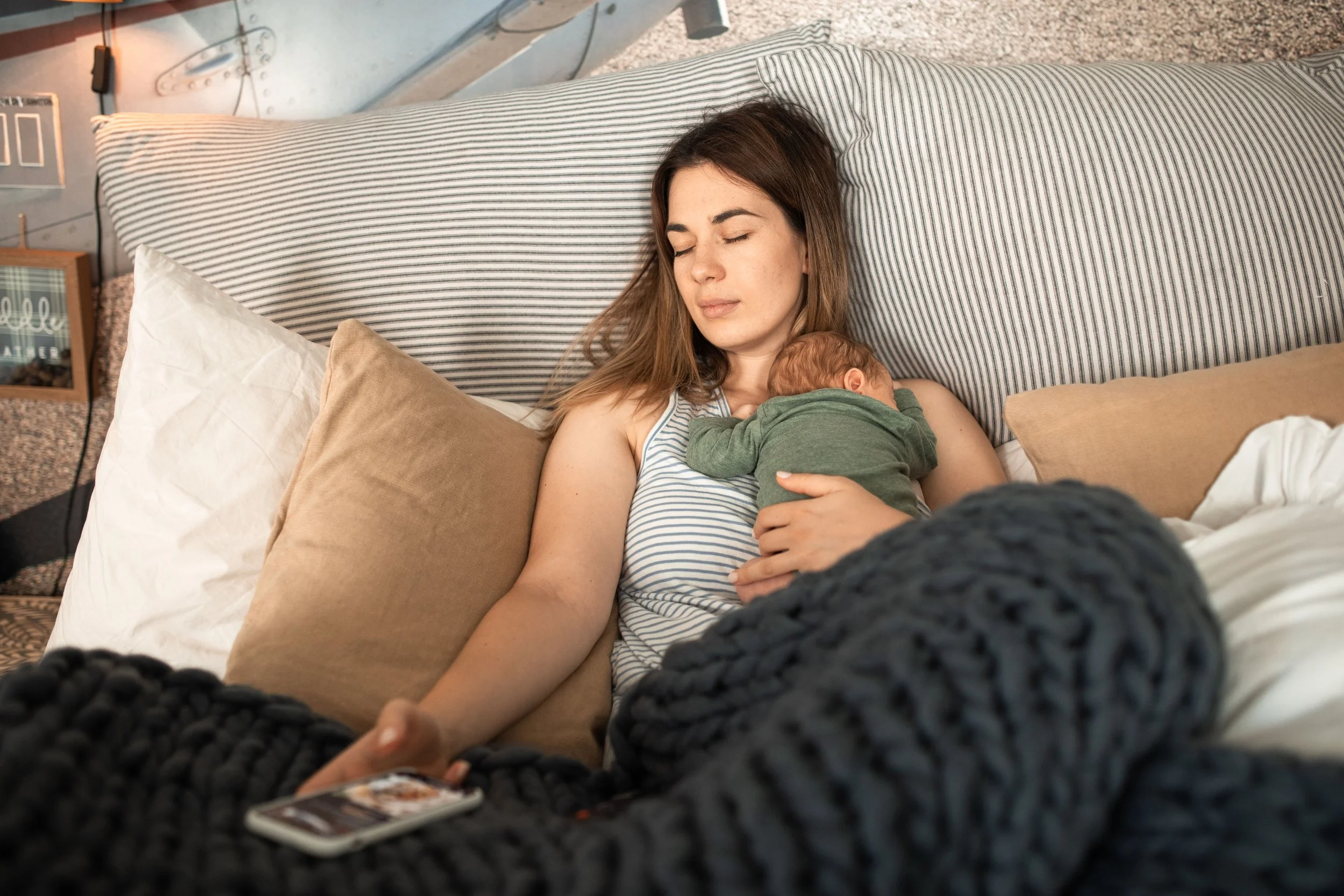
Postpartum anxiety is about more than hormones. Sleep, stress, identity shifts, and lack of support can all play a role.
Postpartum anxiety is not a personal failure—it’s a physiological and emotional response to a major life shift. According to a study published by Qin Z et al. (2025), “Women with PPA symptoms tended to be younger, have accompanying somatic diseases, slept less than 6 hours a day, and have a low annual household income.”
Hormonal Changes
After birth, estrogen and progesterone levels drop rapidly. These hormones play a role in mood regulation, and sudden changes can impact anxiety levels.
Nervous System Overactivation
Your brain is wired to protect your baby. For some women, this protective instinct becomes heightened into hypervigilance—where your body stays in a constant “alert” state.
Sleep Deprivation
Lack of sleep significantly affects emotional regulation and increases anxiety. Even small disruptions in sleep can intensify anxious thoughts.
Identity Shifts
Becoming a mother changes how you see yourself, your responsibilities, and your priorities. That shift can feel destabilizing, even when it’s wanted.
Pressure and Expectations
There’s often an unspoken expectation that motherhood should feel natural and joyful. When your experience doesn’t match that, it can create internal pressure and self-doubt.
Lack of Support and Resources
You are not meant to raise a baby completely isolated. There are many studies that show that lack of support from a partner, family, friends, or hired help significantly impacts mother and baby’s health overall. A lot of changes and stressors occur during this time that you need help with. Studies show that individuals with a lack of support, chronic illnesses for mother or baby, and lack of financial resources are significantly more at risk for PPA.
Mental Health History
Previous mental health conditions such as depression, anxiety, and/or bipolar increase your likelihood of having a perinatal mood and anxiety disorder, which includes during pregnancy and postpartum.
What Can Make Postpartum Anxiety Worse
Certain patterns can unintentionally keep anxiety going:
Constant Googling or searching for reassurance
Comparing yourself to other moms online
Avoiding situations that trigger fear
Not getting enough support
Trying to “push through” without acknowledging how you feel
These responses make sense—but they can keep your nervous system stuck in a loop. You have to put your oxygen mask on first before we can help others.
How to Cope with Postpartum Anxiety

Small steps can help calm your nervous system. You do not have to navigate postpartum anxiety alone.
The goal isn’t to eliminate anxiety completely—it’s to help your body feel safer and more regulated.
Ground Your Nervous System
Simple grounding techniques can help bring your body out of a stress response.
Example:
5-4-3-2-1
Name 5 things you can see
4 things you can feel
3 things you can hear
2 things you can smell
1 thing you can taste
Somatic Changes
Splash your face with cold water
Smell an essential oil like lavender or eucalyptus
Eat a sour or spicy candy (Favorites: lemons, Mexican candies with tajin, warheads) or very strong mints
Put an ice cube on the inside of your wrist
Take a cold shower
This helps shift your brain out of “what if” thinking and back into the present as it shocks your nervous system.
Notice Thoughts Without Believing Them
Instead of trying to stop anxious thoughts, try noticing them:
“I’m having the thought that something bad might happen.”
This creates distance between you and the thought.
Limit Reassurance-Seeking
Repeatedly checking or seeking reassurance can temporarily reduce anxiety—but often reinforces it long-term.
Create Small Moments of Control
Ask yourself, “What’s within my control right now?” When everything feels overwhelming, focus on small, manageable actions:
Stepping outside for fresh air
Taking a short shower
Asking for help
Talk to Someone Who Understands
You don’t have to hold this alone. Talking to someone who understands postpartum anxiety can help you feel less isolated and more supported. Reach out to supportive family, friends, or look for a perinatal mental health therapist. It’s also very helpful to engage in mother/baby groups and support groups. Postpartum Support International has a ton of resources on their website for free support groups virtually or in your area.
When Postpartum Anxiety Becomes More Than “Just Stress”
It may be time to seek additional support if:
Anxiety is interfering with your ability to sleep
You feel constantly overwhelmed
Intrusive thoughts feel distressing or hard to manage
You’re avoiding daily activities
You don’t feel like yourself
Support doesn’t mean something is “wrong” with you—it means you’re responding to what you need.
How Therapy Can Help with Postpartum Anxiety

You do not have to carry postpartum anxiety alone. Support can help you feel like yourself again.
Therapy can provide a space where you don’t have to filter or minimize what you’re feeling. It is somewhere that you can learn techniques that actually make you feel better and more like yourself again. It is a safe place that allows you to be seen, validated, heard, and challenged as needed.
In sessions, you might:
Understand what’s happening in your body and mind
Learn tools to regulate anxiety
Process identity changes and expectations
Build confidence in yourself as a mother
My approach is warm, collaborative, real and grounded in helping you feel more like yourself again—not a “perfect” version of motherhood.
FAQ
Is postpartum anxiety normal?
Yes, many women experience anxiety after birth. However, if it feels overwhelming or constant, support can help.
How long does postpartum anxiety last?
It varies, but many women begin to feel relief with the right support and tools. We can assess together what tools are best options including therapy, specific types of therapy, medication, TMS, and other techniques.
Can postpartum anxiety go away on its own?
Sometimes—but therapy can help you feel better faster and more consistently. If treatment is not received for postpartum mood and anxiety disorders, it is significantly likely that they will reoccur.
Is postpartum anxiety the same as postpartum depression?
They can overlap, but anxiety often involves excessive worry, difficulty stopping intrusive thoughts and physical tension, while depression may involve low mood, lack of interest in things that you once enjoyed, isolation and disconnection.
Do intrusive thoughts mean something is wrong with me?
No—intrusive thoughts are common in postpartum anxiety. What matters is how they’re supported and managed. Anxiety is meant to be there when we’re in danger like if a bear is attacking us. However, it becomes a problem when our nervous system begins registering that we’re constantly in danger or that your baby is in danger.
If you’re feeling overwhelmed, anxious, or not like yourself, you don’t have to navigate this alone. Becoming a mother comes with so many stressors and can feel extremely overwhelming. Between the hormones, lack of sleep, physically recovering from birth, breastfeeding challenges, and more, motherhood is not easy. When a perinatal mood and anxiety disorder is present, it can be even more challenging. Let’s start talking about the challenges of motherhood and parenthood more and giving more support to new parents.
If you want to start connecting with yourself and start feeling better, reach out today. I am passionate about helping new mothers feel better about their journey through motherhood. I offer therapy for women experiencing postpartum anxiety and other perinatal challenges across California, Florida, Texas, Virginia, and Idaho.
References
Díaz Ogallar, M. A., Martínez Vázquez, S., Hernández Martínez, A., Peinado Molina, R. A., & Martínez Galiano, J. M. (2025). Prevalence and associated factors of anxiety in postpartum women. European Journal of Midwifery, 9, Article 9. https://doi.org/10.18332/ejm/204308
Falah-Hassani, K., Shiri, R., & Dennis, C.-L. (2017). The prevalence of antenatal and postnatal co-morbid anxiety and depression: A meta-analysis. Journal of Affective Disorders, 210, 1–15. https://doi.org/10.1016/j.jad.2016.12.015
Qin, Z., Pan, Y., Yang, H., Luan, L., Zhang, X., & Zhu, C. (2025). Prevalence and risk factors of postpartum depression, anxiety, and comorbidity of both disorders: A cross-sectional study. Frontiers in Psychiatry, 16, Article 1585546. https://doi.org/10.3389/fpsyt.2025.1585546
Until next time,
Take what serves you and leave the rest.
Healing doesn't happen all at once—it happens in small moments of understanding, self-compassion, and choosing to keep moving forward.
If you're navigating pregnancy, postpartum, infertility, miscarriage, birth trauma, relationship challenges, or another major life transition, you don't have to figure it out alone.
I'd be honored to walk alongside you.
— Megan Monger, LMFT, PMH-C
Founder, Sail Away Therapy
Ready for support?
Whether you're preparing for parenthood, adjusting after birth, processing infertility or loss, or navigating another life transition, therapy can help you feel more grounded and supported.
Continue Reading
You might also enjoy:
Disclaimer: This blog is intended for educational purposes only and does not constitute medical or mental health treatment. Reading this article does not establish a therapist-client relationship. If you're experiencing a mental health emergency, please contact your local emergency services or crisis hotline immediately.